PROJECT OVERVIEW
The AI Combo Tool enables promoters and Business Developers to create branded food-and-beverage promotional assets without relying on external creative agencies.
Users can upload a photo of a dish or venue, select a beverage, add promotional details and use generative AI to produce a ready-to-review combo menu. The experience guides them from content creation to approval, production and performance tracking.
PROJECT SCOPE
Owner: Coca-Cola HBC
Role: Lead UX/UI Designer and sole designer responsible for the end-to-end product experience.
Project type: Enterprise B2B product · Generative AI · Human–AI Interaction · New product development · MVP pilot
Deliverables: Co-design workshops · Design Sprint · User journey · User flows · Wireframes · Interactive prototypes · UI design · AI interaction patterns · Validation and fallback states · Development-ready designs
Tools: Miro, Figma, Lovable,
Status: The first live MVP was delivered ( Early 2026 )
STORY
The initial idea came directly from the end users. Creating promotional combo menus required multiple exchanges with external creative agencies, making the process time-consuming for Business Developers and expensive due to high production costs.
My role was to refine the Business Developers’ needs and work with the Innovation Lab team to transform their initial idea into a complete digital product.
UX Solution
The AI Combo Tool enables promoters and Business Developers to generate branded food-and-beverage visuals using uploaded images and text prompts.
The main design challenge was not simply adding AI to the workflow, but creating an experience that balanced:
creative freedom with brand consistency;
automation with human control;
speed with content quality;
local flexibility with global governance.
I led the end-to-end UX design, transforming generative AI into a guided workflow with validation and approval steps. The first live MVP was delivered in four months.
“Designing the AI Combo Tool was not simply about automating content creation, but about balancing creative freedom with brand governance and human control.”
The Approach
I followed a collaborative, user-centred approach to refine the Business Developers’ initial needs and turn them into a feasible product experience. I facilitated co-design workshops and a Design Sprint with end users, business stakeholders, architects and developers.
Together, we mapped the end-to-end journey, prioritised the MVP features and defined how users would generate, refine, validate and approve AI-created assets. The solution was iteratively prototyped and tested to balance user autonomy, technical feasibility, content quality and brand governanc
ROLE
I led the UX process from early discovery to development-ready designs, working closely with promoters, Business Developers, the Product Owner, business stakeholders, architects, developers and AI experts.
As the sole UX designer on the project, I was responsible for:
planning and facilitating co-design workshops;
leading a Design Sprint;
mapping the end-to-end creation and approval journey;
translating AI capabilities and limitations into understandable interactions;
designing prompt-based and image-upload flows;
defining validation, feedback and recovery states;
creating prototypes and testing the experience with users;
Delivering the final UI in compliance with the CCH Design System and supporting its implementation
Outcome
Enjoy is designed to be the single source of truth for product teams at Coca-Cola HBC. It reduced design-developer friction, sped up delivery times, and improved user experience consistency across customer-facing and internal platforms.
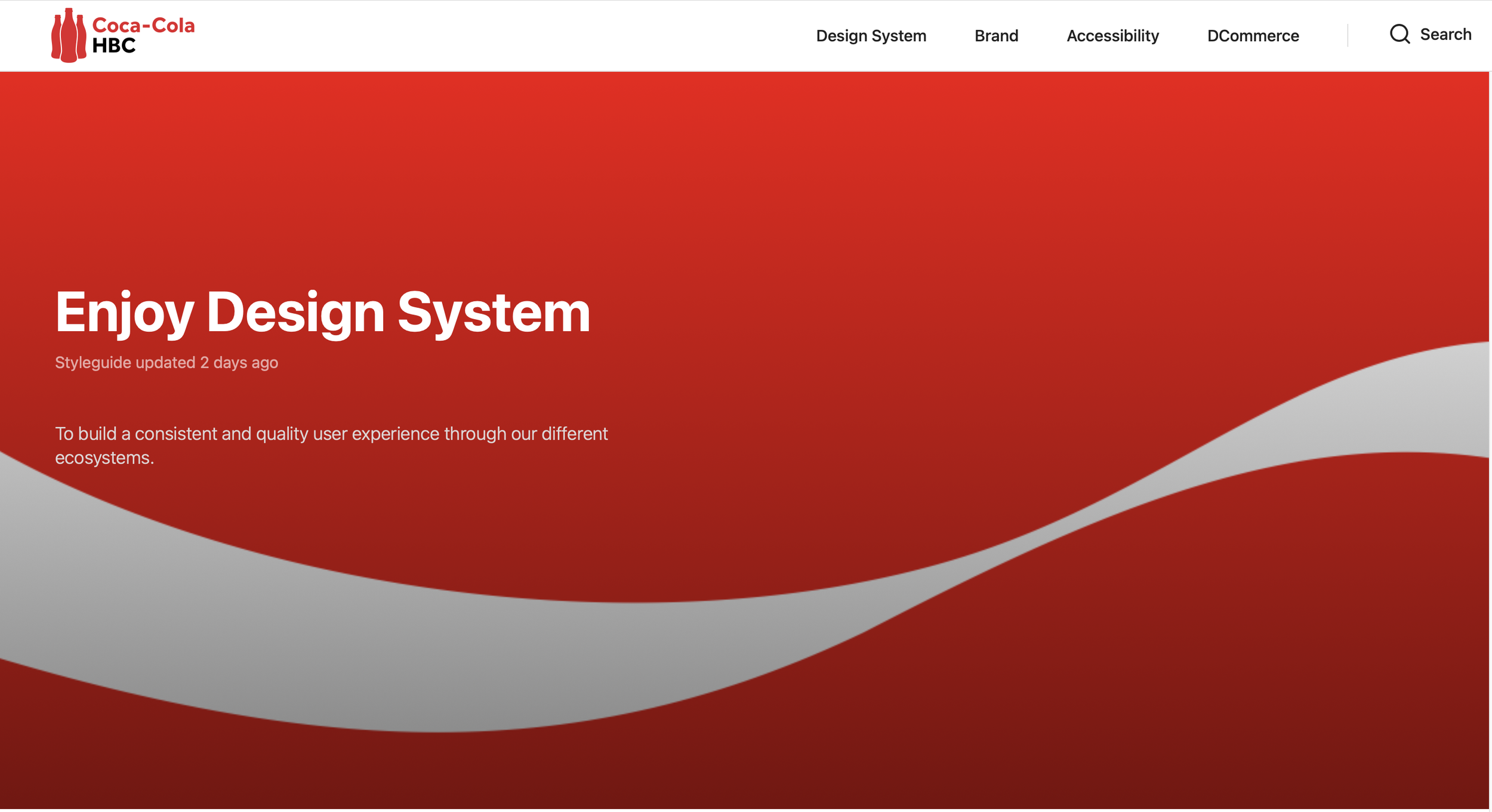
Landing page
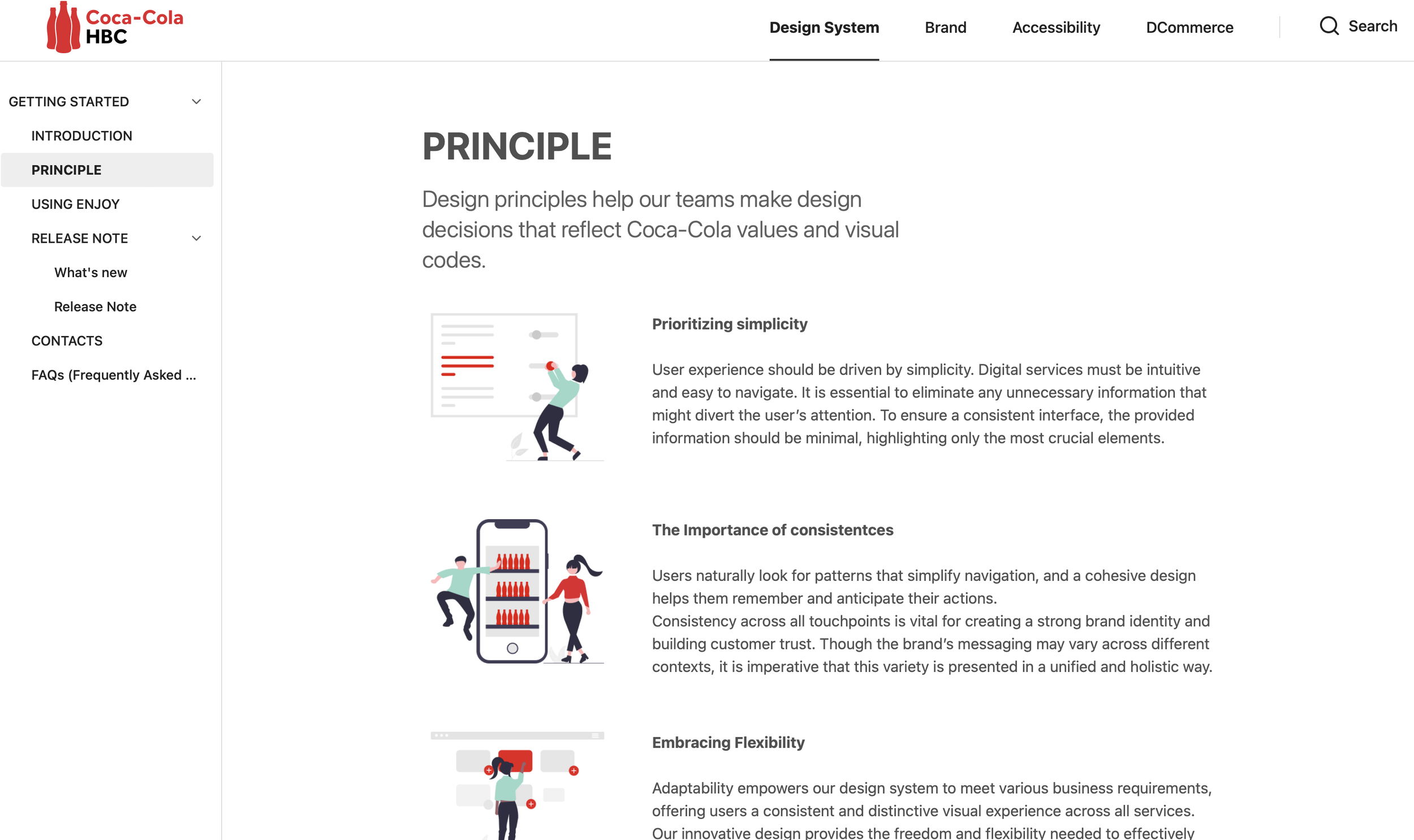
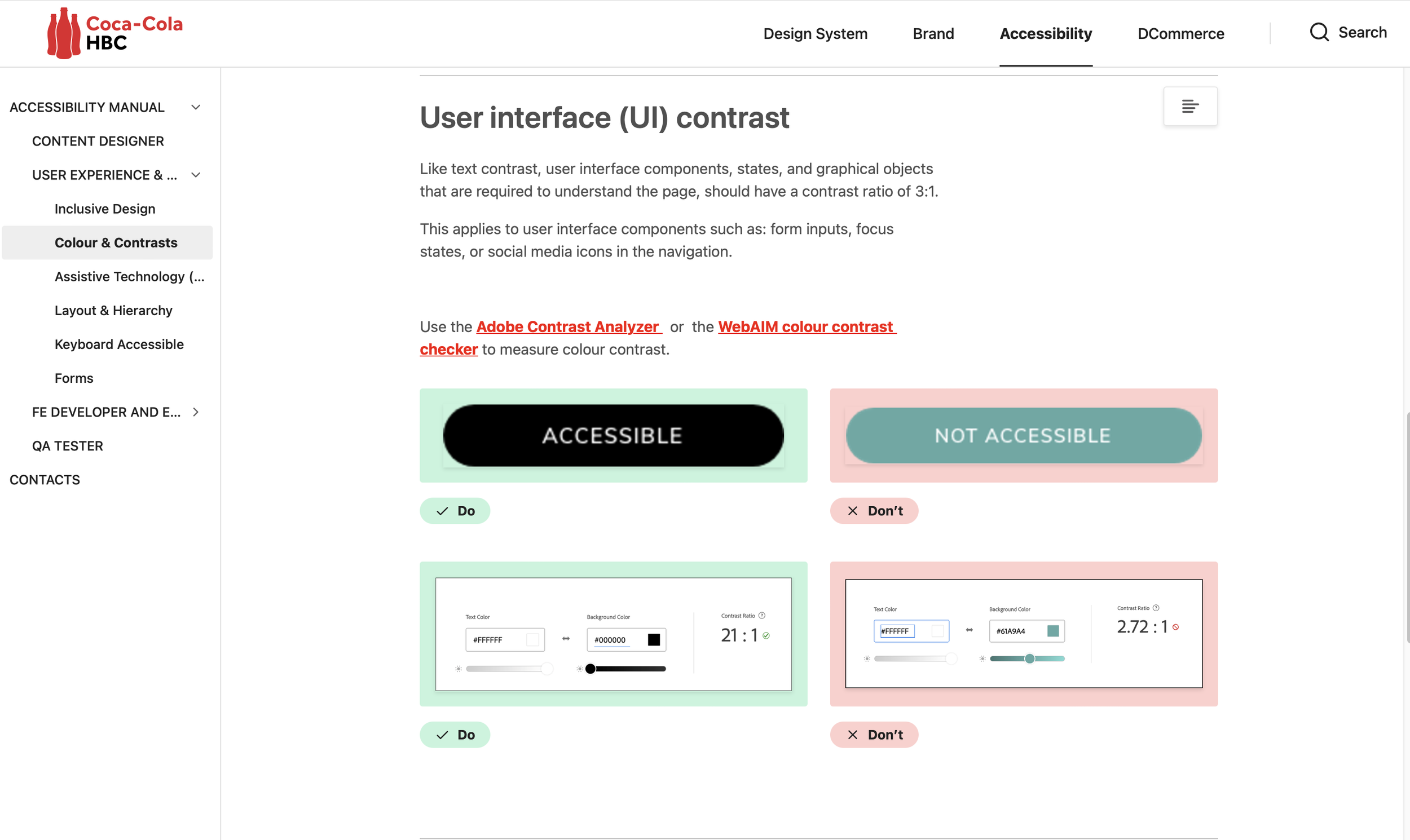
Key Activities
Defined and prioritized the design system roadmap and governance model
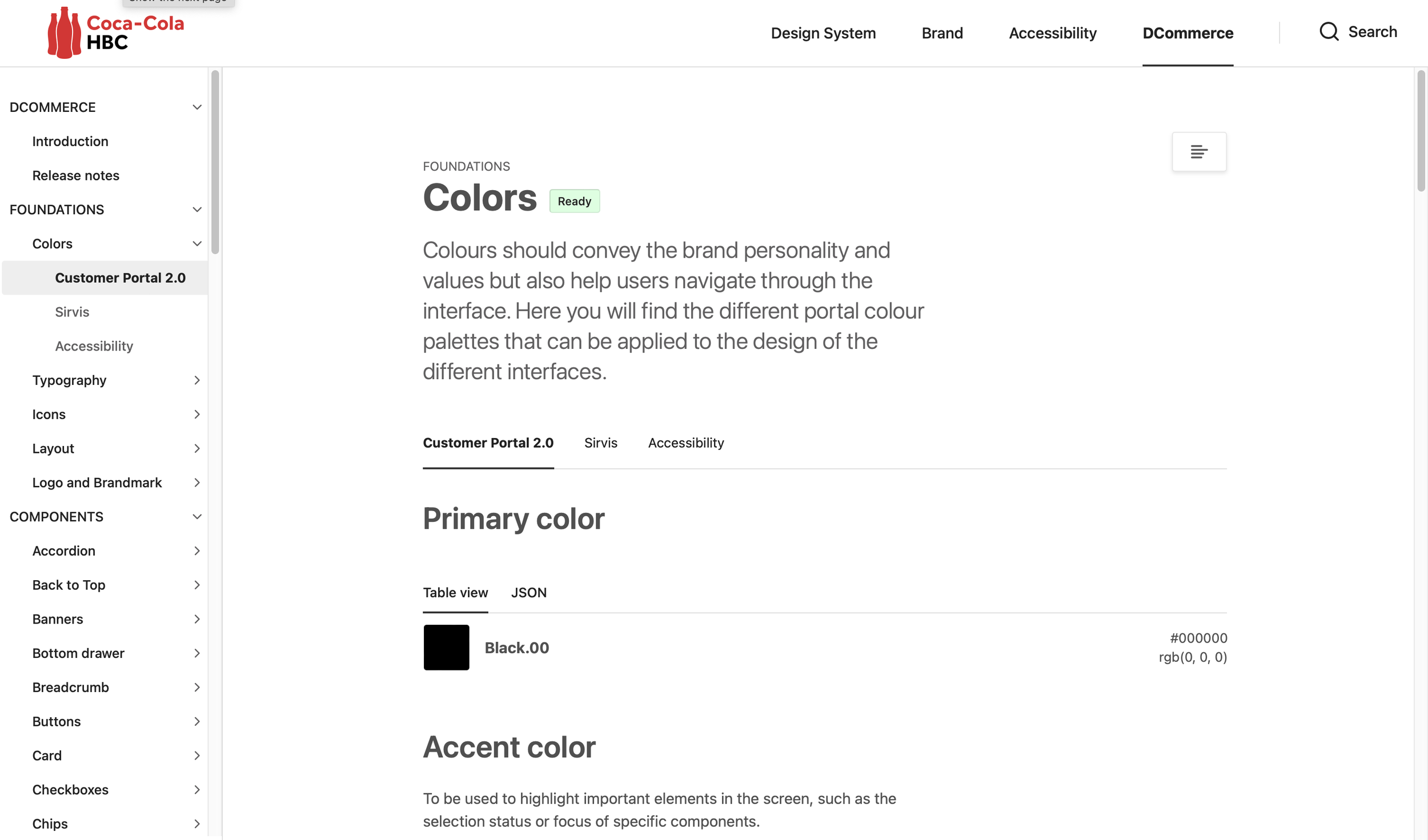
Validated foundations (typography, color, spacing, grids)
Created and validated reusable components and templates with Product Owners and Business Analysts
Integrated accessibility and responsive best practices
Supervised all content creation and documentation
Maintained the system in Zeroheight and collaborated with front-end developers
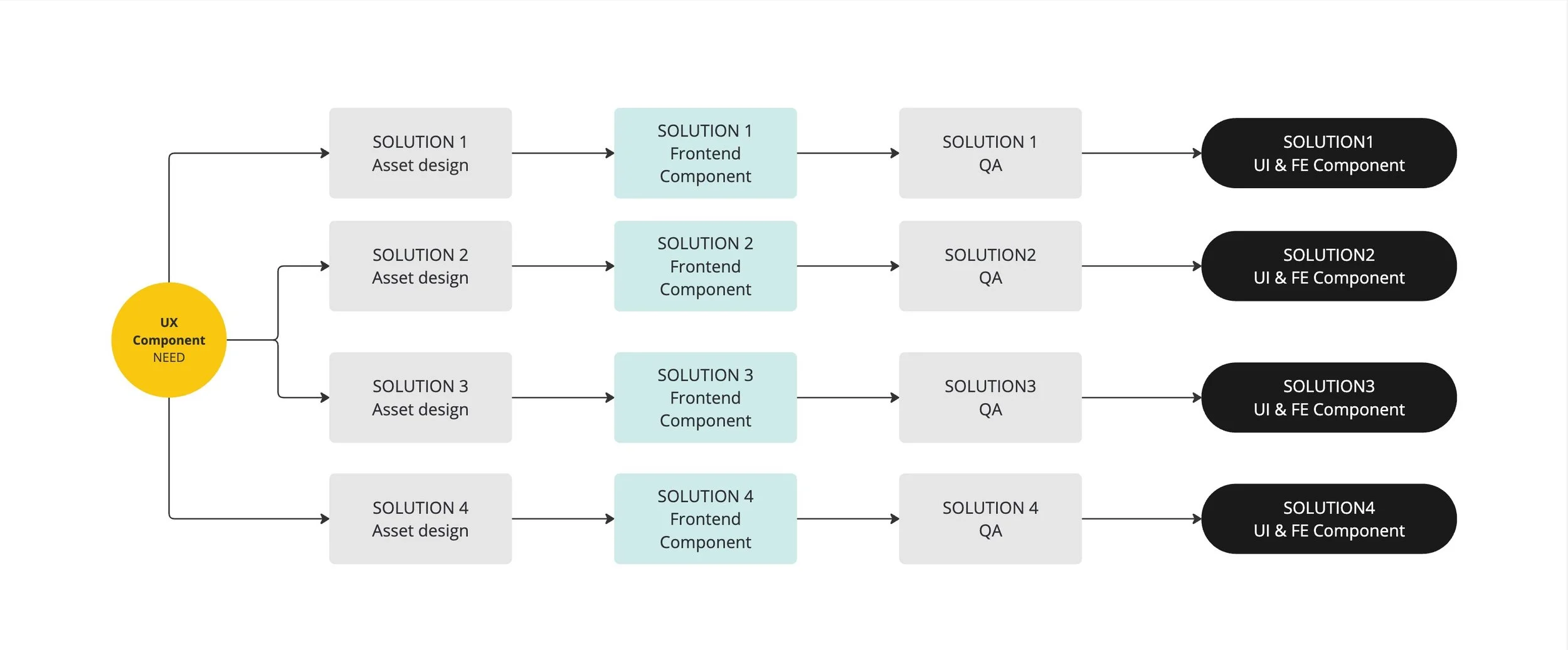
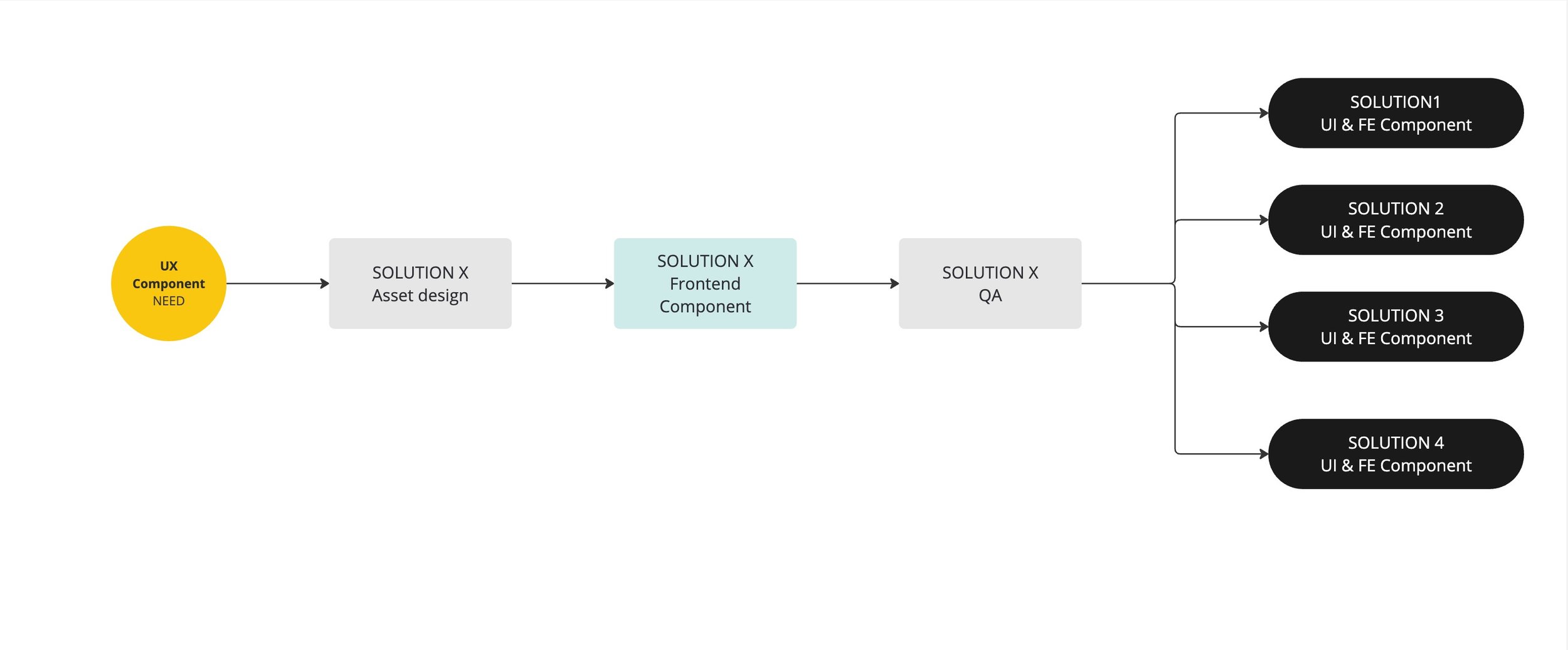
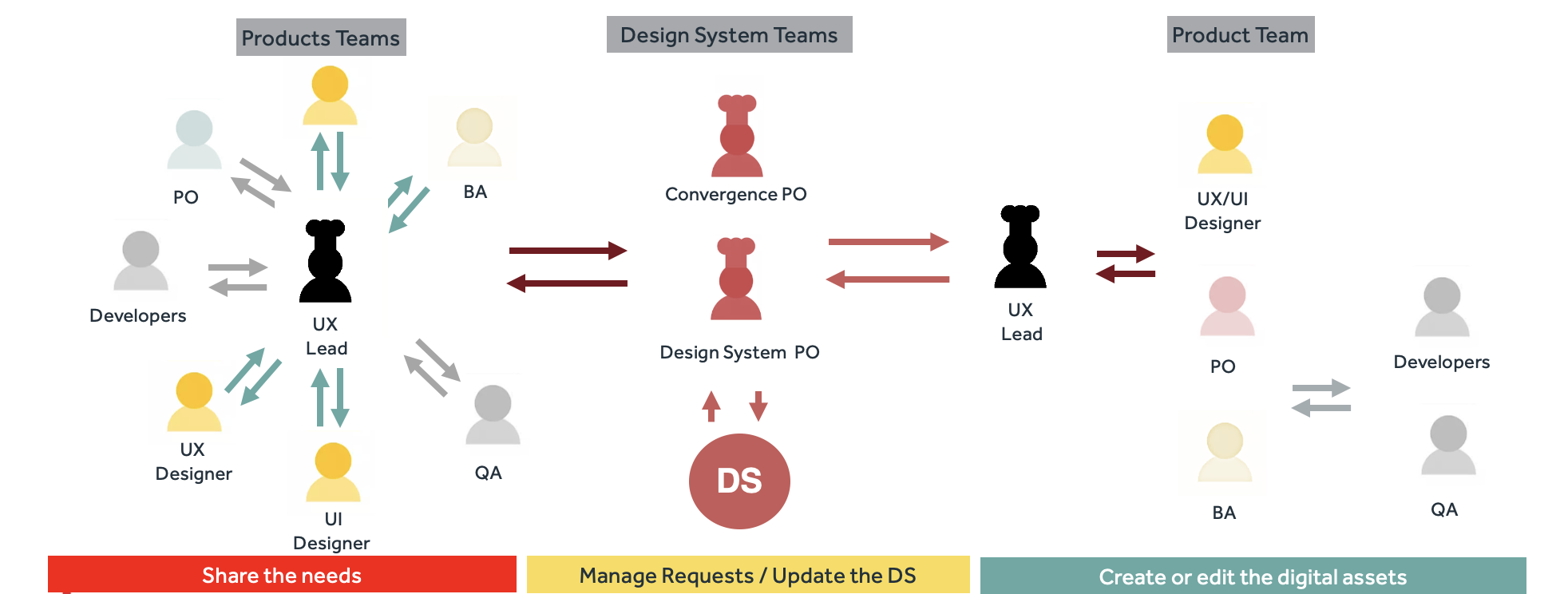
Operating Model: With vs. Without a Design System
How an it looks without a design system
How it looks with design system
Governance Model
TThe governance model I’m promoting is inspired by Zalando’s approach, which balances centralized governance with decentralized contributions. By clearly defining roles—core maintainers, contributors, and consumers—it enables distributed ownership while ensuring high quality and strategic alignment. This is essential in a complex, multi-stakeholder environment like ours.
What Made the Difference
From Fragmentation to Centralization: A Scalable Design Ecosystem
We’ve transitioned from scattered, uncentralized XD files to structured Figma design kits and a centralized CMS. This new setup includes clear documentation and usage guidelines for each digital asset. It’s now accessible not only to designers and developers but also to business stakeholders. Anyone in the organization can easily find and use what they need.
Before
In XD, files lacked a clear structure, making it difficult to locate the necessary assets. This often resulted in confusion, delays, and duplicated work across teams, slowing down collaboration and delivery.
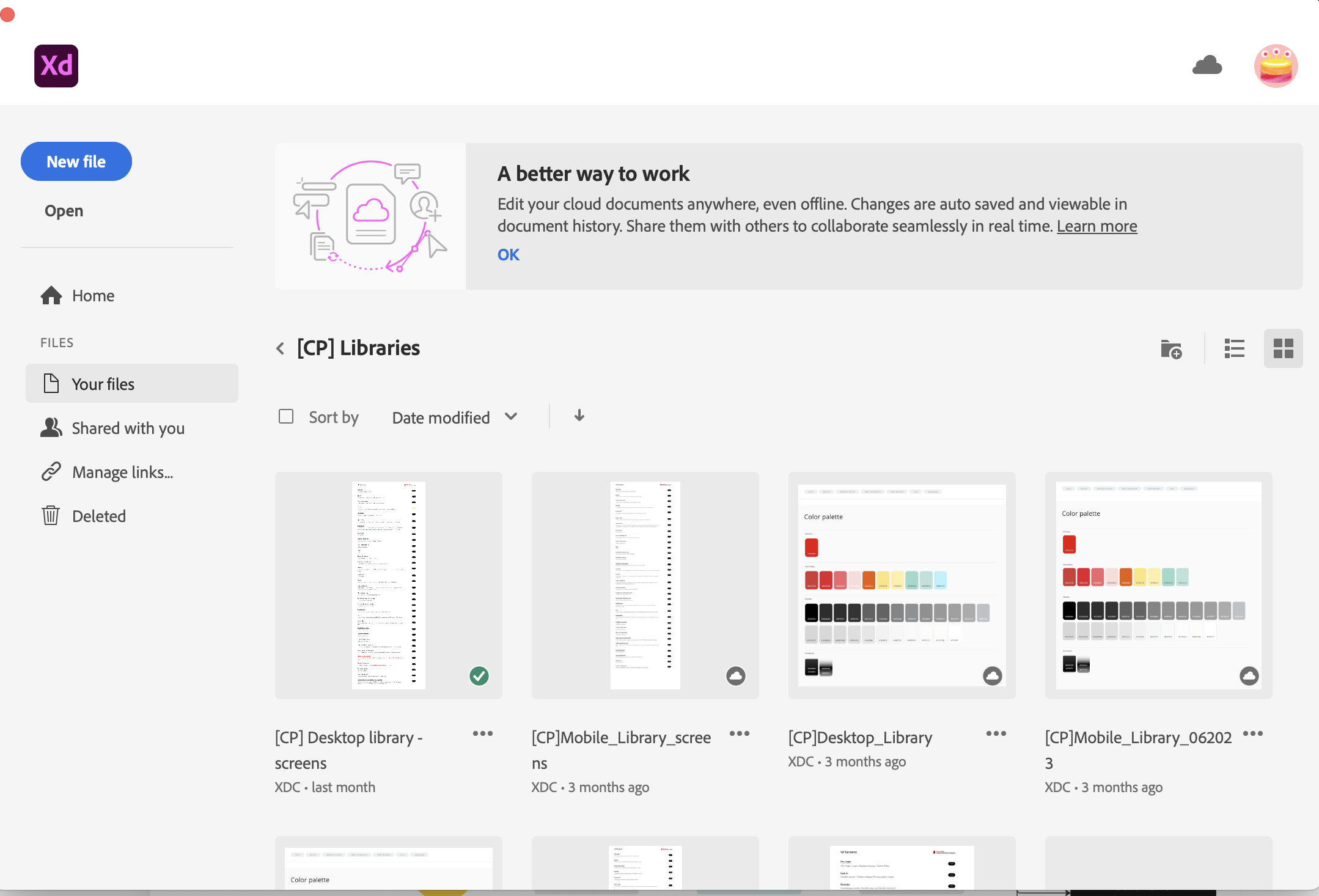
XD design system
After
Figma and the CMS share a consistent asset structure, making navigation easier and the user experience smoother for everyone.
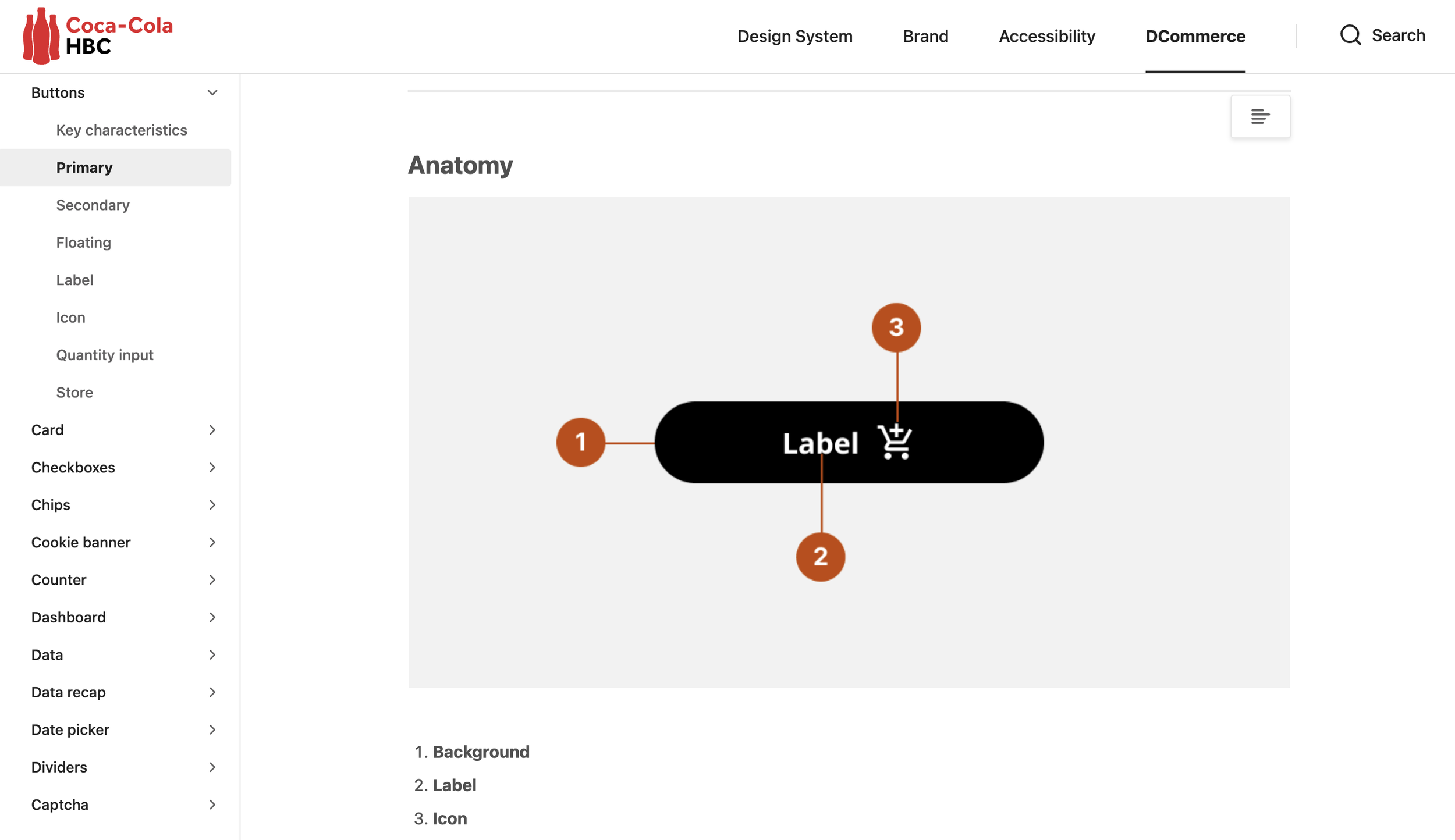
CMS
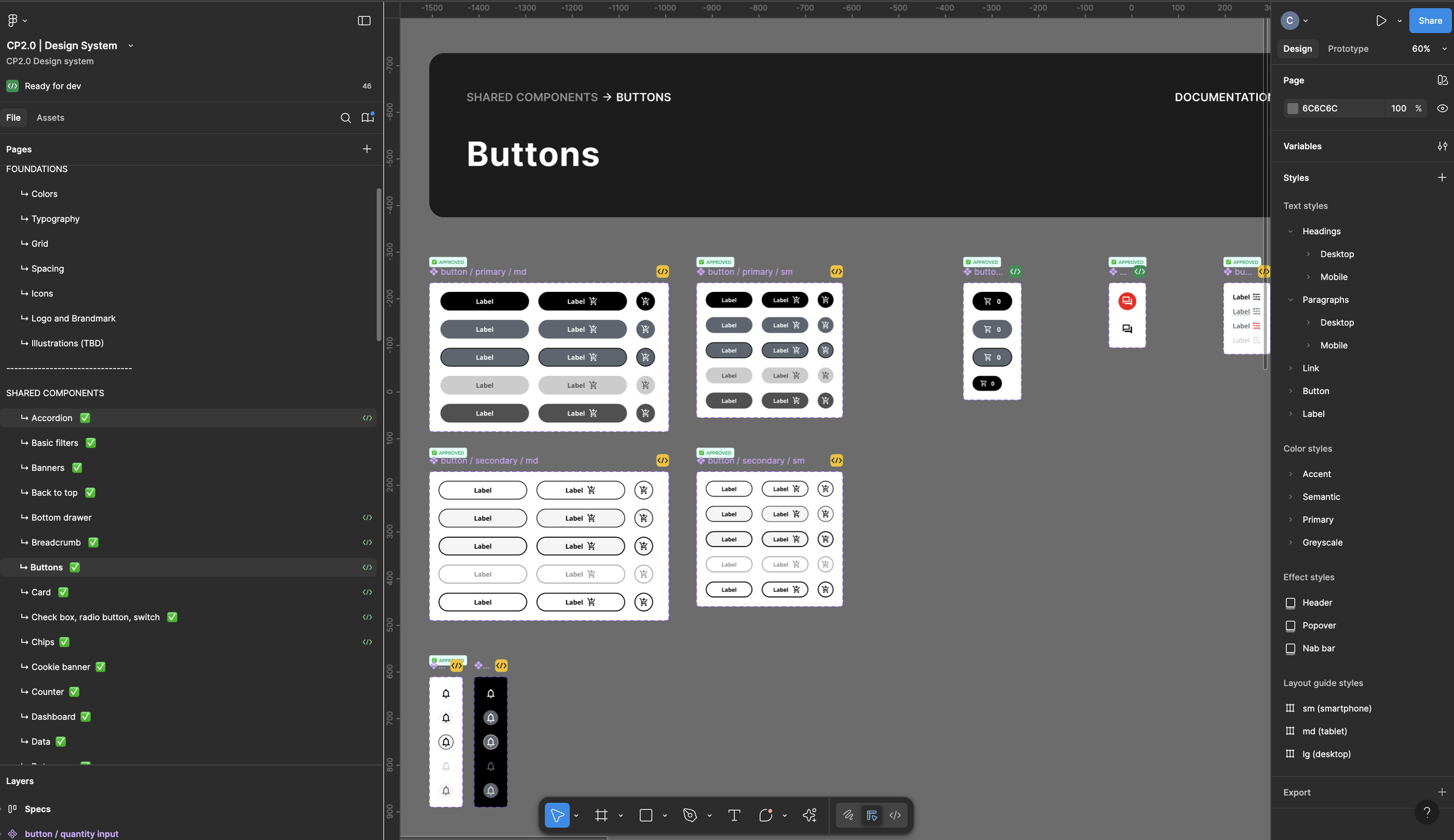
Figma
Atomic design
The atomic design approach ensures consistency and scalability by breaking interfaces into reusable components. It streamlines collaboration between designers and developers, making the design system more efficient and maintainable
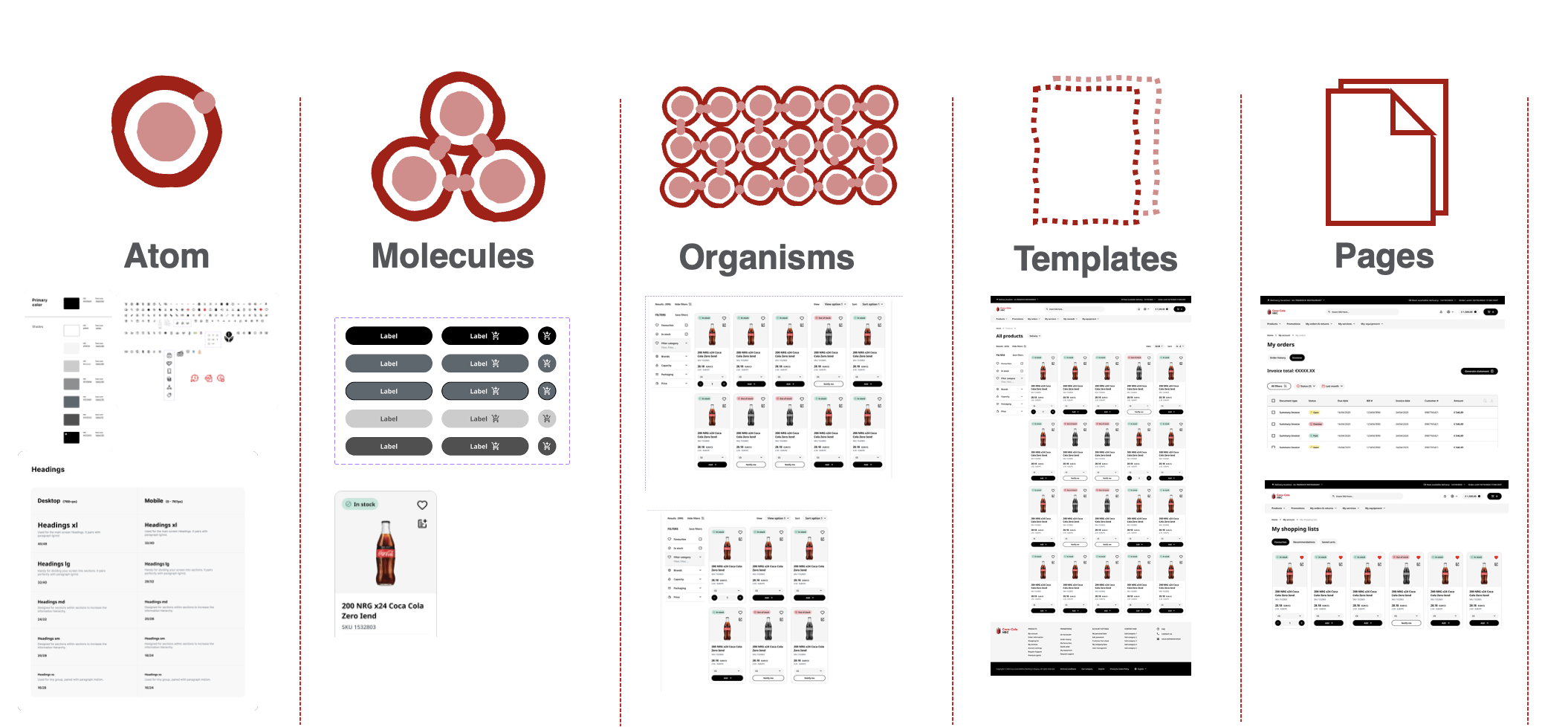
How the Atomic design Looks like
Consistent Structure Across Figma and CMS Enhances Efficiency Across All Applications
Having Figma files structured consistently across different design systems makes it easier for designers and developers to navigate, understand, and reuse components. It streamlines collaboration and reduces onboarding time.
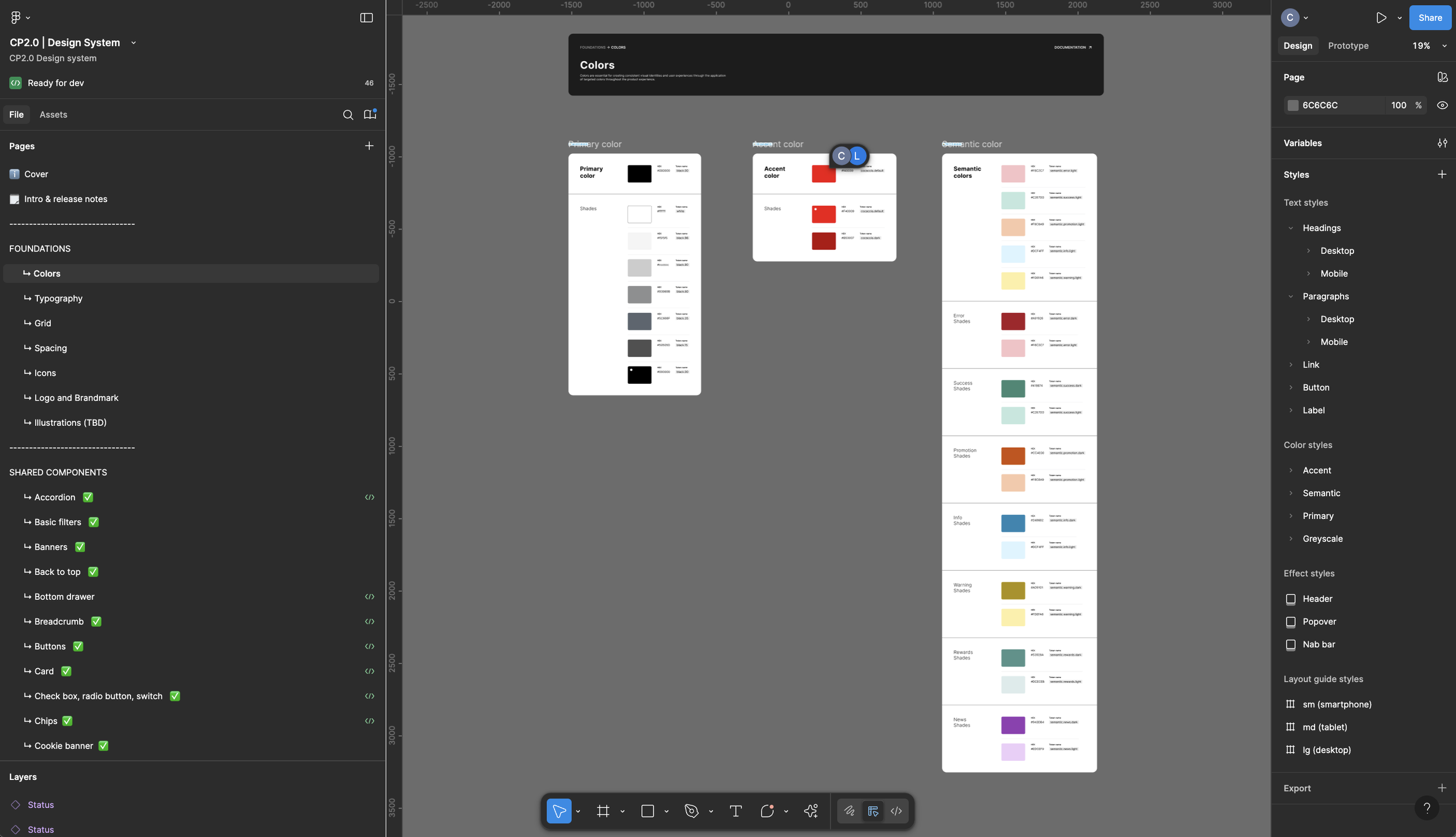
Customer Portal Figma File
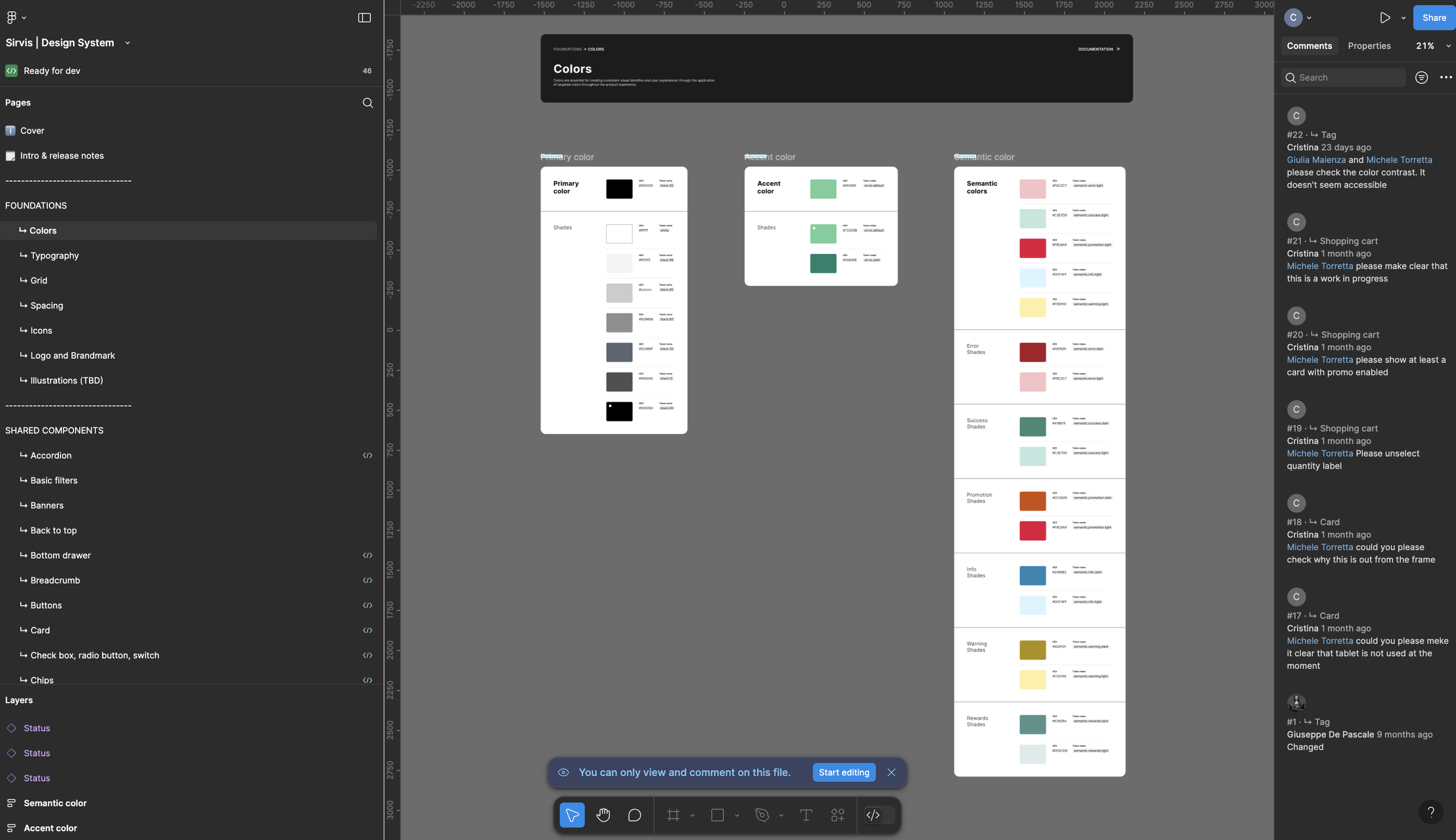
Market Place Figma File
BACK TO WORKS